
…finding rest & rhythm for life with bread
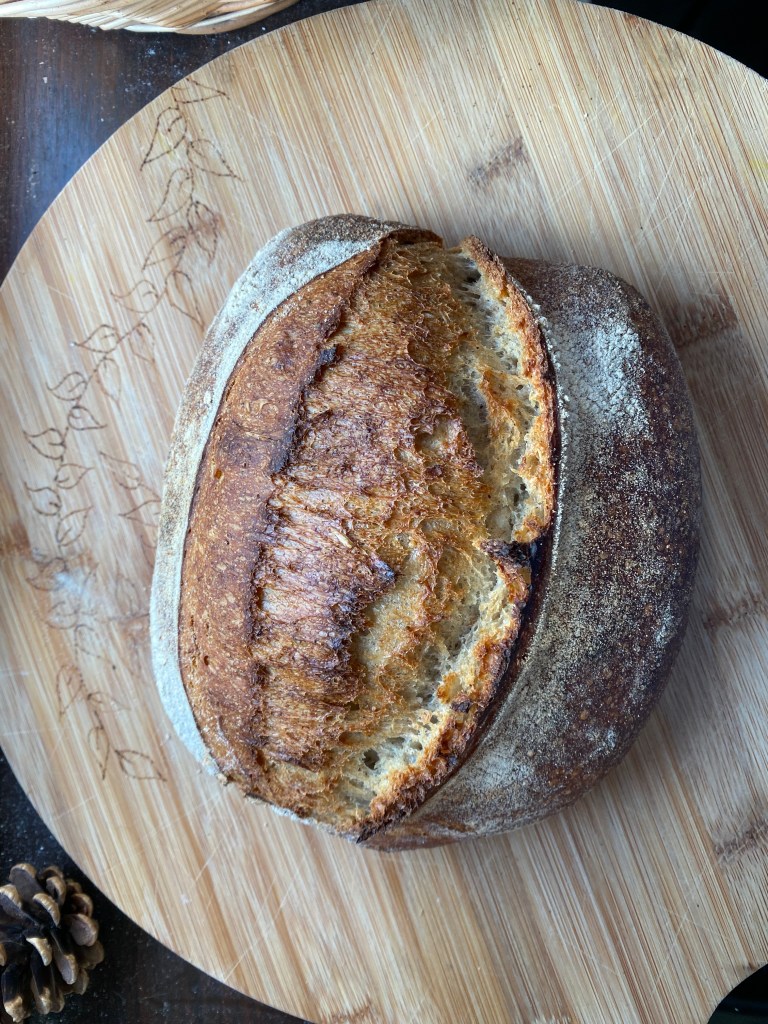
Where do you see signs of new life in your own life or in your community that you could nurture, and which may nourish others?
‘A woman takes some yeast and mixes it with a bushel of flour until the whole batch of dough rises…‘
Diocesan Synod, June 2022: wild yeast notes
Do pass on your gift to someone you know who makes bread, or have a go using it yourself. It needs keeping in the fridge until you are ready to use it. When you are ready to feed and use your gift of wild yeast, transfer into a larger container and add equal parts of flour and water each day for 3 days and leave to develop on your kitchen counter (try 50g/50ml for first 2 days and then 100g/100ml) on the last day. After 3 days you should have enough yeast to make a loaf of bread which you could gift or share with others.
Recipe
Once ready to make the bread, add 100g of the wild yeast to 350ml of water and 500g of flour. You may need to add more water if your mixture is too dry. Mix roughly and leave for an hour covered with a tea towel. After an hour add 10g of salt and mix into the dough. Now simply leave for up to 4 hours covered with a damp tea towel, occasionally stretching the dough and folding it over in a clockwise direction until you are back to the beginning each time. Do this 3 or 4 times in the four hours.
Once approx. 4 hours has passed, flour the surface and turn out the dough. It might be sticky, but that’s ok. Shape it into a ball and place either in a lightly floured proving basket or colander which is lined with a clean tea towel. Leave either covered in the fridge overnight, or leave out for a further 6-8 hours for its final prove – although keep an eye on it if it’s a warm day as it may rise perfectly well much sooner. When you are ready to bake, preheat your oven to 220C or 200 fan and once ready, turn out on to a lightly floured baking sheet, score with a cross and bake in the oven for approx 20/25 mins.
There are many ways to use the wild yeast/leaven/sourdough starter with plenty of recipes if you want to try an alternative method.
Here’s a no knead recipe: https://www.hobbshousebakery.co.uk/blogs/recipes/henrys-sourdough
Advice on how to keep your sourdough starter and feed it here: https://www.hobbshousebakery.co.uk/blogs/news/140060999-sourdough-starter-video
Why not invite friends or neighbours to make and share bread with you and finish with a blessing…
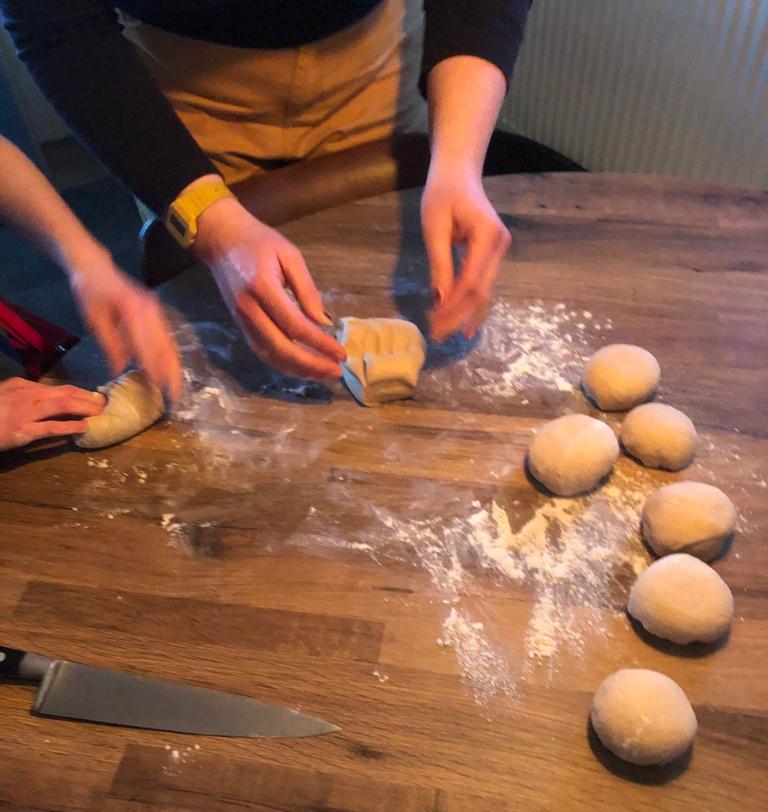
A Blessing
We end this meal with grace for the joy and nourishment of food, the slowed time away from the world to come into presence with each other and sense the subtle lives behind our faces, the different colours of our voices, the edges of hungers we keep private, the circle of love that unites us. We pray the wise Spirit who keeps us to change the structures that make others hunger and that after such grace we might now go forth and impart dignity wherever we partake
Grace after meals, John O’Donohue

Becca Gilbert is a Pioneer Priest living and working in Cumbria. She is passionate about exploring connections between food, faith and spirituality. Get in touch by emailing becca.gilbert@westerndales.org.uk
Jesus told them another parable: ‘The kingdom of heaven is like yeast that a woman took and mixed in with three measures of flour until all of it was leavened.’ Matthew 13: 33
 Brigid's Table